Wednesday, November 08, 2006

Ridge Walking in the Cheat Canyon

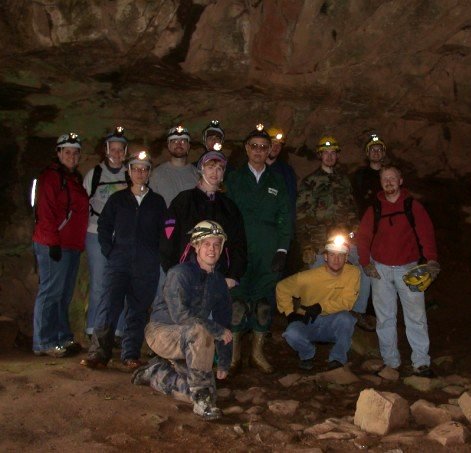
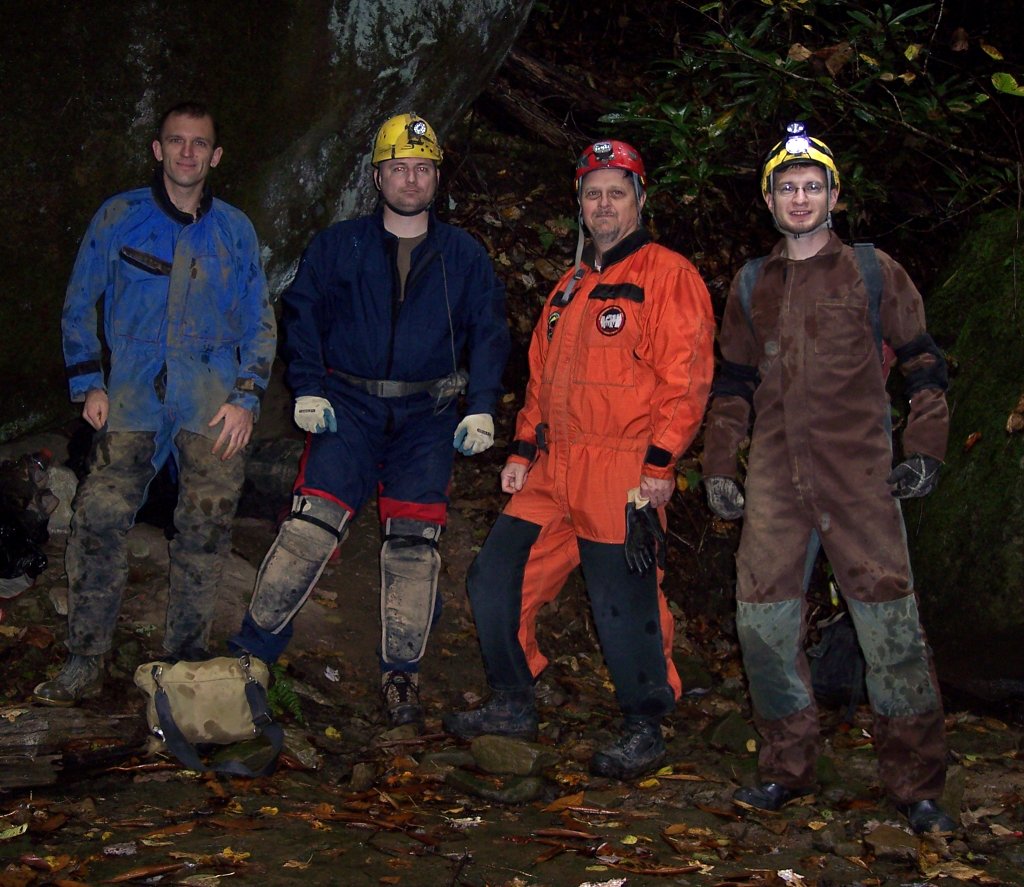
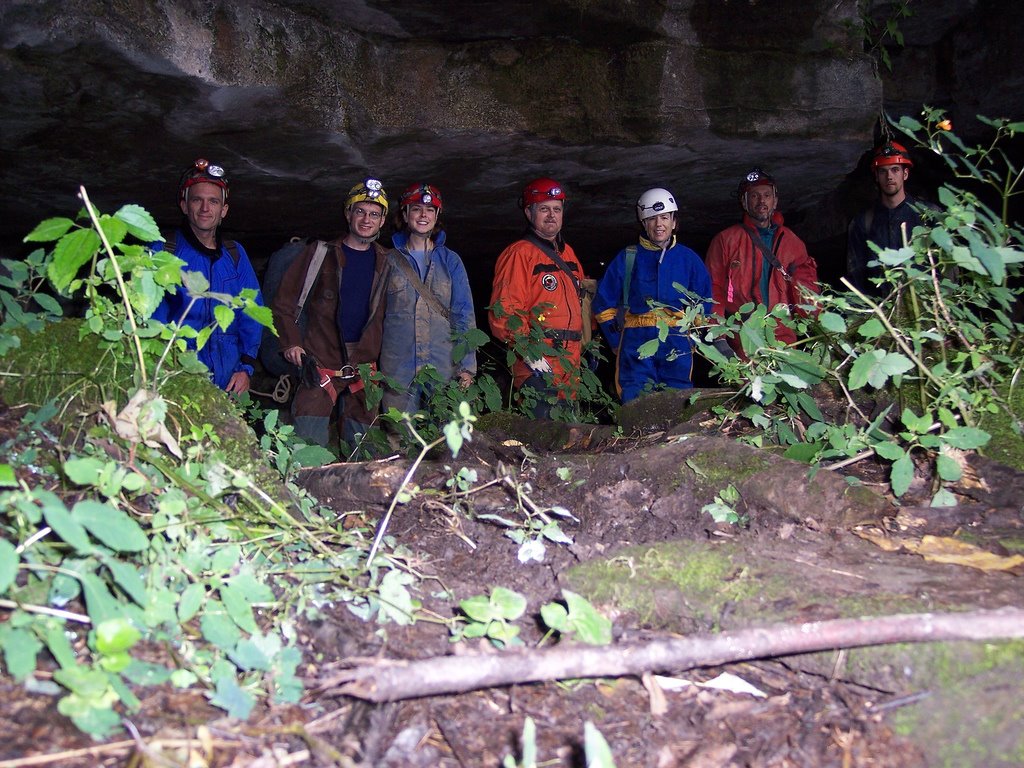
Kyle McMillan, Gayle Suppa, and myself -- Dave Riggs -- did some ridge walking down in the Cheat Canyon on Election Day. We met at 10am at Coopers Rock, then hiked the trail out to Raven Rock. From there, we followed the power line cutaway straight down into the gorge. This canyon is incredibly steep! Though the forecast called for rain all day, we had a beautiful day with nothing more than a few sprinkles.

After somehow passing right over the limestone outcrop, we continued down to a sheer vertical drop just a few hundred feet from the river itself. We'd gone too far, and started hiking over to a stream falling over a sandstone shelter cave.


Gayle under the shelter cave. The stream flows down from Beaverhole Lower Cave.

We followed this stream straight up the hill and, as expected, found it to be the stream resurgence of Beaverhole Lower Cave. We spent about 45 minutes in Beaverhole Lower, traveling back in it's single straight-line passage until we were sufficiently bored. Some of the walls are polished smooth from all the caver traffic back in the 60's and 70's, as evidenced by the old signatures back there. Hard to believe that so many people made this brutal hike down for such a boring cave. If nothing else, the cave is interesting in that there are no side leads or tributaries, it's just a single passage extending at least 1300' straight into the mountain.


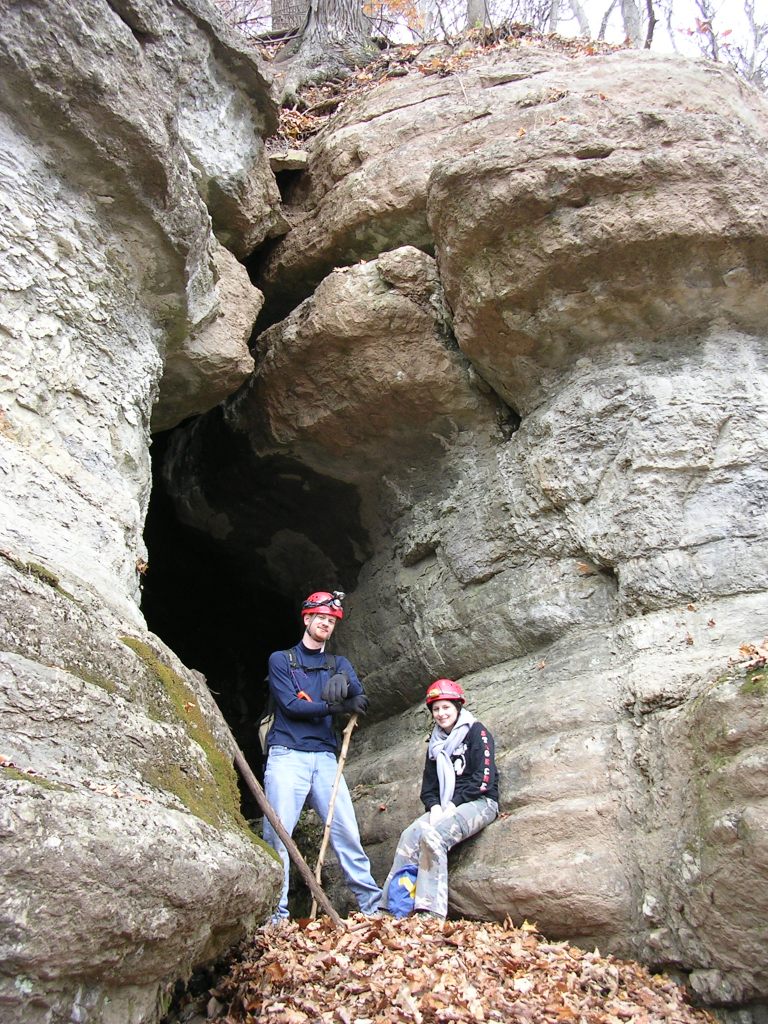
Kyle and Gayle at the entrance to Beaverhole Lower Cave

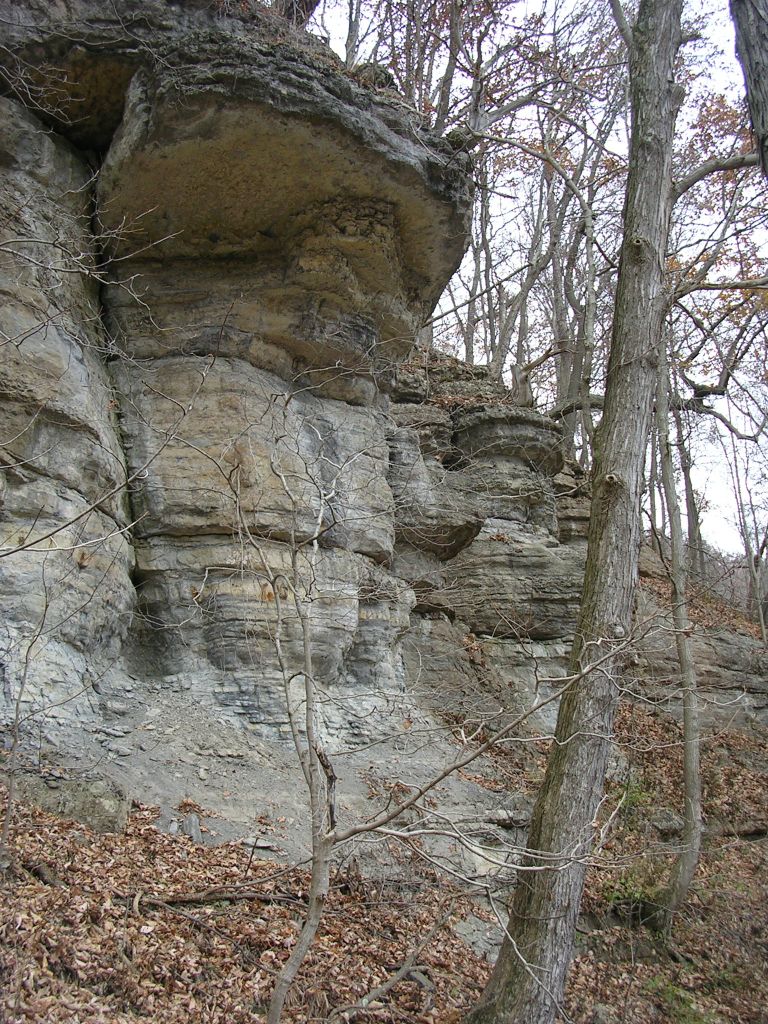
Then we followed the limestone outcrop, hoping to find something new and exciting. Travel was very slow as the terrain was extremely steep and slippery, at some points bordering on dangerous. We found a 40' high limestone cliff with a 2' - 4' diameter cave passage up in the cliff, but weren't able to safely get close enough to check it out. Vert gear will be required to investigate it.


Limestone cliff with small cave passage visible up towards the top/middle

We traveled a bit farther, just enough to spot a very large valley and an 80' tall waterfall over a limestone cliff in the distance. It's enough to make me want to brave the brutal hike through the canyon again to check it out. We were back to Morgantown by just after 4pm and had a well-deserved meal at IHOP. We then met the WVUSG at 5pm and I went with them to Beaverhole Upper.

See: My Photos

Thursday, November 02, 2006

Raese on Vampire Bats

Republican WV Senate candidate John Raese was interviewed on PBS's Outlook show on Oct. 12. Raese is CEO of Greer Industries, the only group of people who get more excited about limestone than cavers do. The following excerpt from the interview is Raese talking about the sorts of government regulation he'd like to do away for the benefit of small business (like his own):

I sit around and battle the endangered species act when I have to sit around and follow how many vampire bats are in a quarry that I have -- send two people down to see how many vampire bats we have. Is that a good law?


He is likely referring to those pesky endangered "vampire" bats in that derned Hellhole Cave (15th longest cave in the US, home to 45% of the world's population of Virginia Big-Eared Bats). The entire interview is full of great quotes, and I recommend that all West Virginians of voting age read the transcript in full. More info on the issue with Greer and Hellhole is available here.

Update: Raese lost.

Thursday, October 26, 2006

2006 Bridge Day Rappel

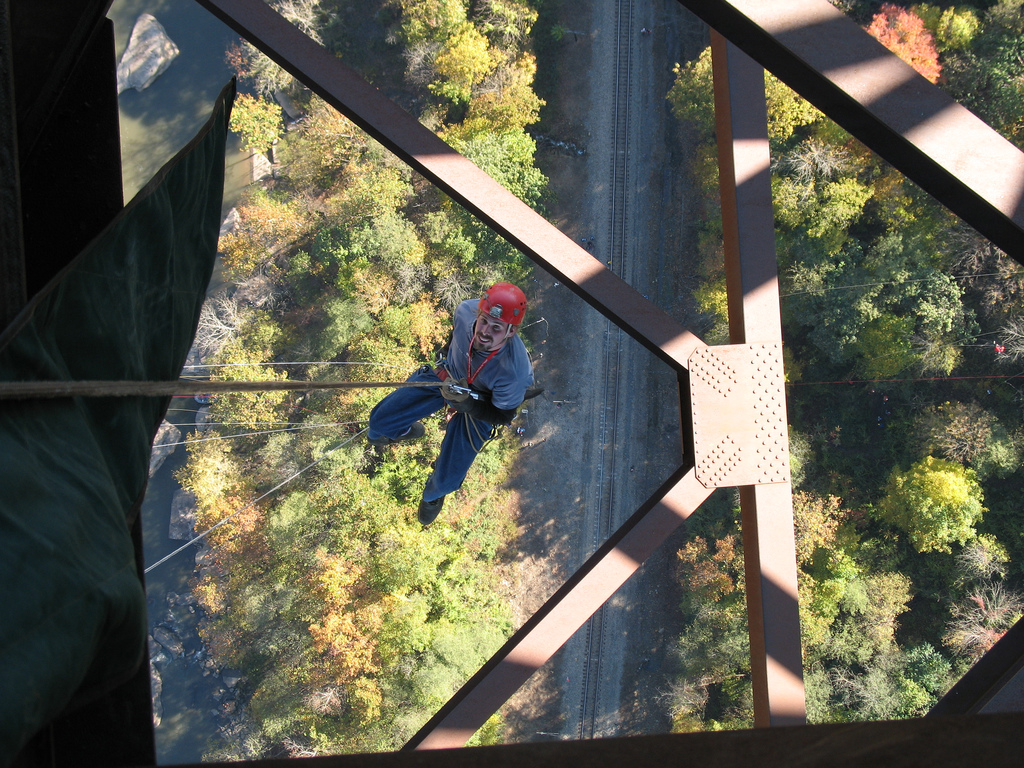
Monongahela Grotto Team Photo Gallery from the 2006 Bridge Day rappel.


Jason Thomas rappels off the New River Gorge Bridge. Photo by Don Ferguson.

Thursday, October 12, 2006

[trip] Caving in TAG

On Oct. 5 - 8, Brian Masney, Mary Schmidt, Judi Wasilewski, and Dave Riggs took a trip down to TAG to drop some classic pits. Our original plan was to photograph Fantastic Pit then head to the TAG Fall Cave-In, but we decided to skip the Cave-In entirely and squeeze in as much caving as possible instead.

We hit the road from Morgantown at about 2pm on Thursday and headed South. We met Judi in VA, and then headed down to the tip of Georgia. We finally pulled into the Crockford Pigeon Mountain Wildlife Reserve just after midnight, set up camp and went to bed.

Day 1: Ellison's Cave

We woke up early Friday morning and gathered up all our caving gear. A second, larger caving group showed up as we were getting ready to leave, but they were a bit less organized than we were. The trail up to Ellison's Cave starts down at Blue Hole, the cave's resurgence. The hike is over a mile uphill, and this hike is exhausting when you're loaded down with gear and rope.
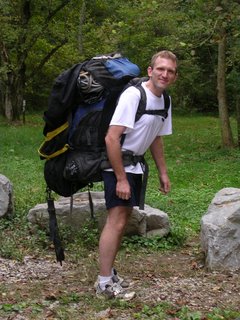

Brian ready to hike up Pigeon Mountain with 900' of rope in tow
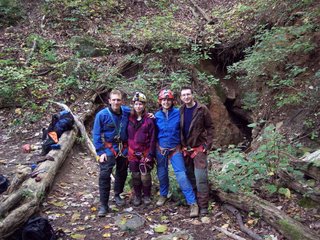

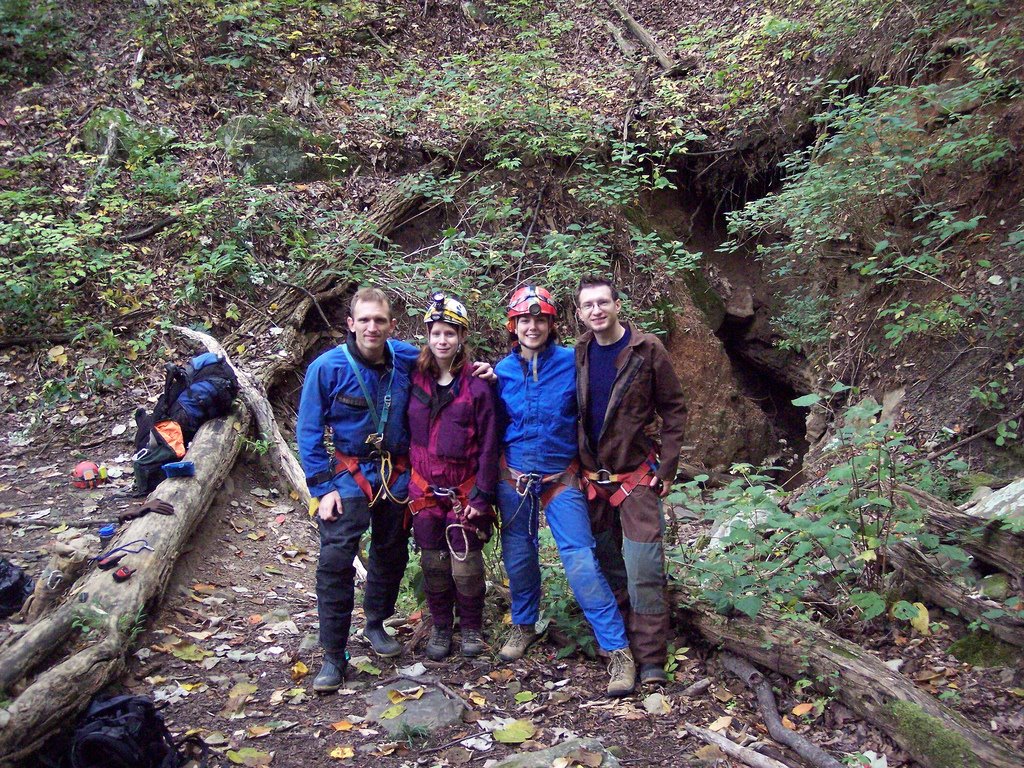
Brian, Mary, Judi, and Dave at the entrance to Ellison's Cave

We reached the unimpressive crack-in-the-ground which is the preferred entrance to do Fantastic Pit and got dressed. After a climb-down, the cave consists of nice walking stream passage (very dry this day) called The Ecstasy, which leads to the 120' Warm-Up Pit. We rigged from a couple bolts in the ceiling and ran our rope through some deep rope grooves worn into the rock, no rope pad necessary -- hooray for PMI. From the Warm-Up Pit, you head up a few nuisance climbs, then to a 20' ascent. From here, it's a short path to a traverse line under a short ledge to The Attic, looking out over Fantastic Pit.

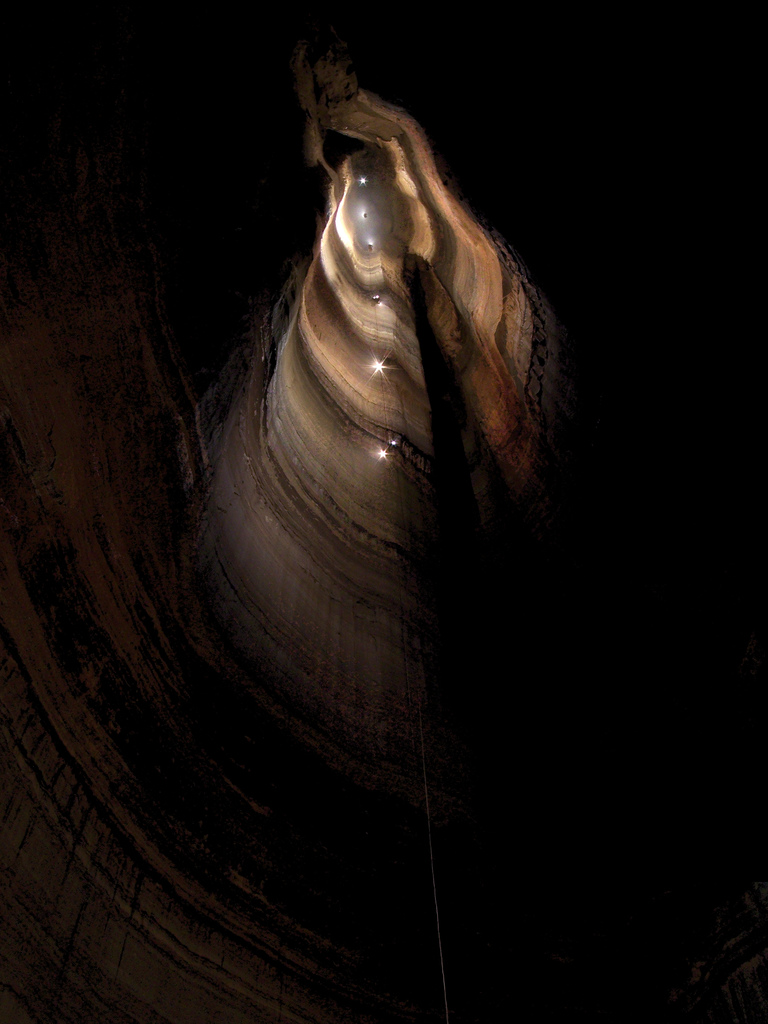
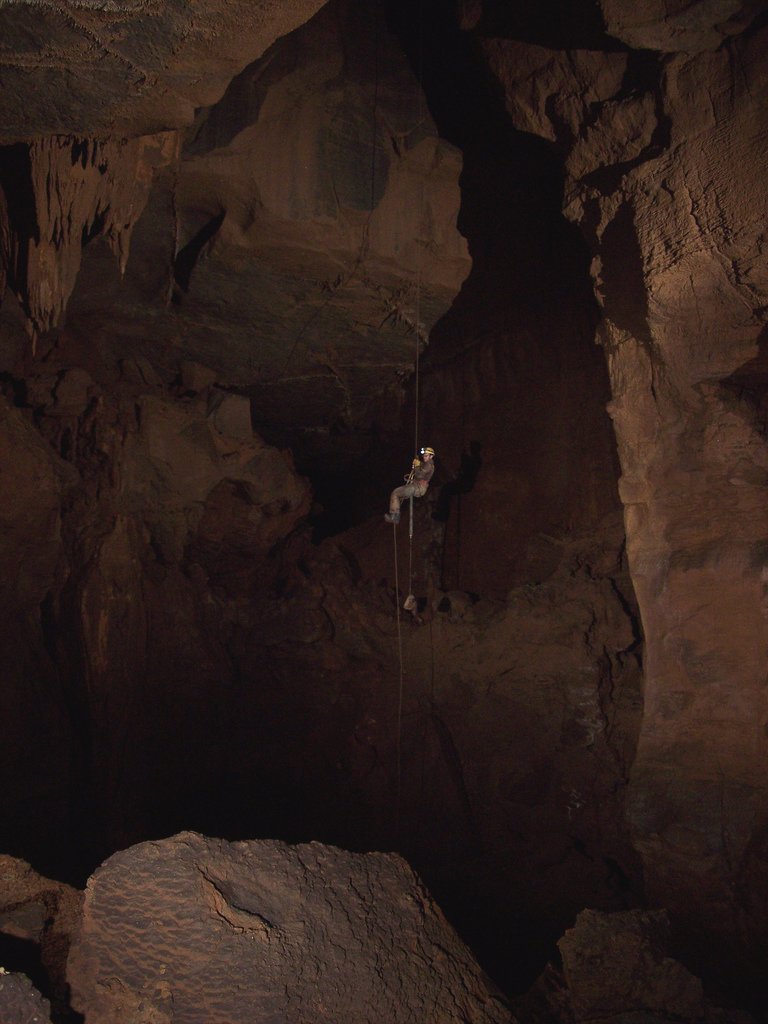
Fantastic Pit is the deepest known pit in the Continental US, a 586' free rappel down a beautiful vertical-walled shaft. We rigged our 900' rope to a massive boulder, tied a knot in the end, then lowered most of it down using a rack to keep it at a safe speed. Brian repelled down first, occasionally shouting or whistling to hear the amazing echo. All of a sudden we heard him shout "F@#%!" and everything went quiet as we all felt our stomachs sink... Brian radioed up that he was hanging 40' off the floor but had reached the knot at the end of the rope. We'd just barely short-rigged the pit. Rather than risk being lowered from above, he changed over and ascended back up. Even though his foot ascender broke on the way, he still made it to the top in what seemed like record time.

We re-rigged the rope, and this time I was the guinea pig to try it out. The ride down seemed to take forever, and the amazing reverberating echo from the pit was absolutely haunting. I finally reached the bottom of the shaft, got off rope, and discovered that my cheap radio no longer worked. Communication from top to bottom is practically impossible without one, and Judi was halfway to the bottom before I knew for sure that she was on rope! One by one, the rest of our team made it to the bottom and got ready for a long wait and a long ascent. I was the first to ascend back out, and was admittedly nervous about it. Not only would I be the first one up our only rope, the biggest ascent I'd ever attempted, but I'd be also be helping Brian photograph the pit by firing off several flashes on the way up.

Brian gave me a quick lesson in the operation of a flashbulb. I was to screw the bulb into the trigger without looking at it, wait for the signal, then look the other way with my eyes closed and fire the unit away from me to ensure that I didn't lose my sight. Oh, and I should also be careful since they sometimes explode if they come in contact with water. Great. I started frogging up at a very slow pace -- the rope would bounce more than 10' with each stride. Every 30 or 40 strides I'd stop and dig through my duffel bag trying to find a fresh flashbulb, arm it, and fire off a shot for the camera. Even with all the breaks, I managed to get incredibly hot and dehydrated. The climb seemed like it took hours.
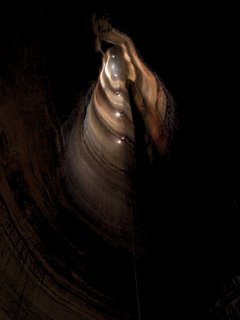

A composite of 10 different individual photos and the result of hours and hours of cave photography, Brian's photo of Fantastic still can't do justice to how enormous this pit is.

Judi headed up next, also armed with a few flashbulbs to light up the rest of the pit. She and Mary flew to the top with their ropewalkers, then Brian frogged back up a second time loaded with all his photography gear! Pulling the rope back up was a huge effort, as was hauling the damn thing back out of the cave -- it's amazing how much your rope and gear expands when you're trying to get back out of a cave. Back down the nuisance drop with that monster rope, and then back up the Warm-Up pit, and then derigging the Warm-Up pit, and then hauling everything back out... we were exhausted, and not looking forward to the hike back down the mountain. We opted to dump our ropes at the cave entrance and hike down lightly, a hike that seemed to have doubled in length since the previous morning. We finally made it back to camp at 4am, after a long but incredible day of caving. After a good breakfast in the morning, the hike to retrieve our ropes seemed like a piece of cake. We found a fraction of the other caving group getting ready to go back in, they had showed up to finally rappel Fantastic -- they'd run out of time the previous day and half of their group had abandoned the trip; the poor remaining three cavers would have to haul the entire party's gear and ropes back out on their own!

Day 2: Neversink Pit

We left Georgia that afternoon and headed to Alabama to drop another TAG classic, the 162' Neversink Pit. We took a quick detour to check out the nearby rock zoo, then parked and geared up. Everyone hiked up the hill and found over a dozen cavers there -- TAG Fall Cave-In traffic.
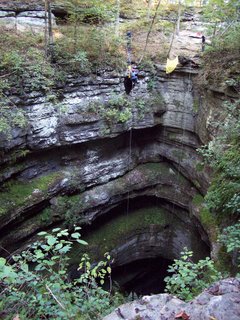

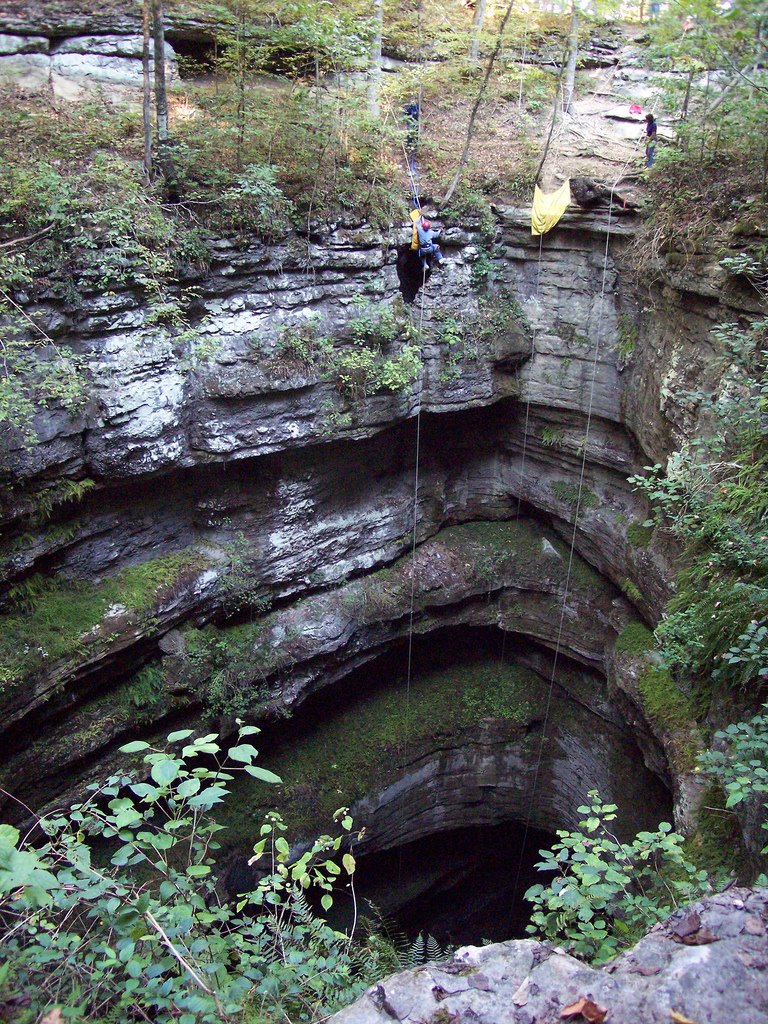
Beautiful view of Neversink Pit

We waited for a good rigging spot to open up, rigged to a tree and waited some more. Finally enough people were out of the way that we could rappel down with our rope. This pit is gorgeous. It's an open-air pit where the sun shines down in, the layered walls are covered with moss and ferns and small waterfalls. We were all able to get to the bottom before the sun set and were treated to an incredible view. This pit seemed tiny after doing Fantastic the day before! After Neversink, we headed to a nearby camping site, complete with bathrooms and hot showers.

Day 3: Cagles Chasm

Sunday we opted to squeeze in one more pit before heading home; we drove to Tennessee for Cagles Chasm. We parked next to a kennel full of barking beagles and got geared up. Time for another hike up another hill, but at least this one was an easy one.
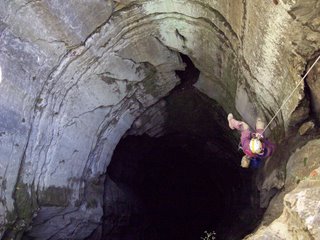

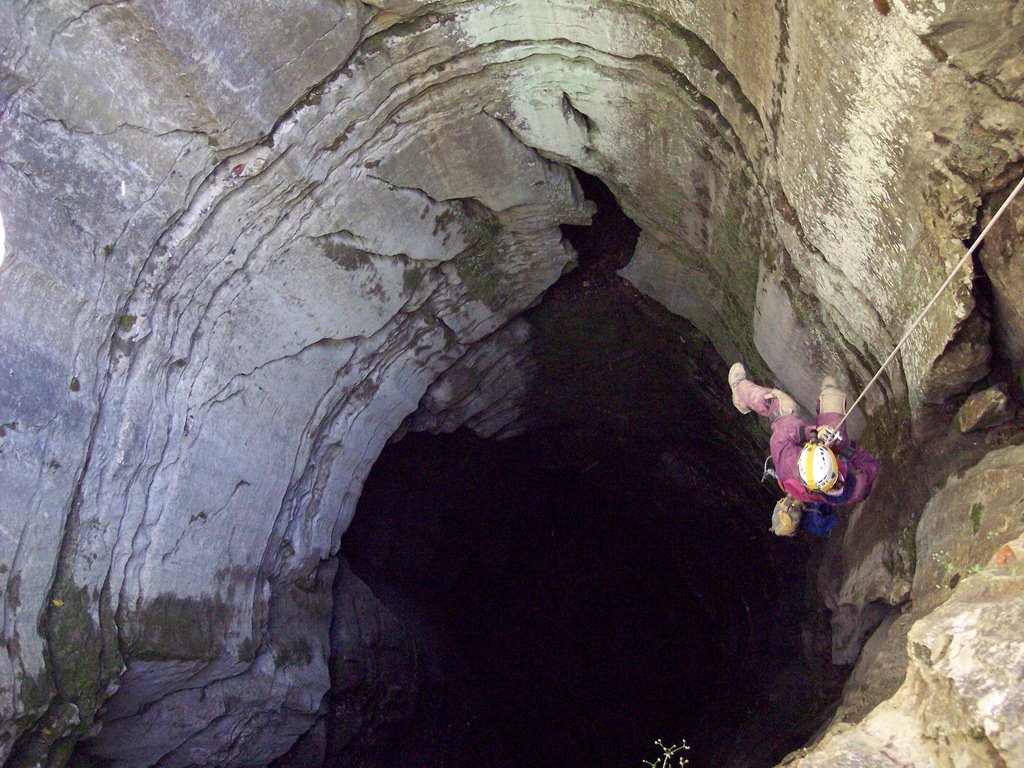
Mary Schmidt rapells into Cagles Chasm

Cagles Chasm is another open-air pit, a 186' vertical shaft which intersects a maze of cave passages on the way down. The view from the bottom looking up is spectacular, especially if you're a geology fan (you are, right?). With no traffic to contend with this time, we bounced the pit quickly and were ready for the drive back home by late afternoon.
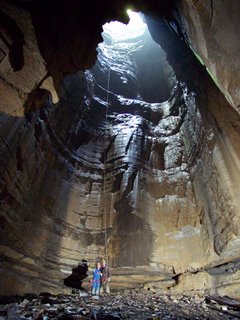

Judi and Dave at the bottom of Cagles Chasm

We made it back to Morgantown by 2am Sunday, after a great weekend full of amazing pits. Everyone was glad that we'd opted to skip the Cave-In to squeeze in more actual caving. After visiting these TAG classics, it's easy to see why this area is the best vertical caving in the country!

All photos by Brian Masney

See: Brian's trip photos
See: My trip photos
Wednesday, October 04, 2006

[trip] Geology Field Trip to Bowden

On Sunday October 1, Dr. Henry Rauch took our Karst Geology class on a field trip into Bowden Cave in Randolph County. We took the class in the main entrance, up the main trunk to the breakdown room, up into the shower room, then through the water course to the gate. It's amazing how many solutional features, structural and lithologic controls, and evidence of paleo-flow you find when you're actually looking for them.


2006 WVU Karst Geology class in the entrance of Bowden Cave. Photo by John Tudek

Saturday, September 30, 2006

NYDC Push Trip

Greg Springer, Brian Masney, Bob Griffith, and myself trekked into New Years Day Cave today with the intent of making the elusive Druid Cave connection.


Before...

We met at 9am and headed to the parking area at the rim of the Cheat Canyon. We hiked down the hill in the rain, geared up, and were in cave at 11:20am. Despite the rain, the cave's water level was still fairly low; we mostly stayed dry except for the rain-soaking we received outside. The outside temperature was roughly the same as underground, so the Druid winds were non-existant. After the rock-on-rock crawl - a 15'-long crawl with both chest and back against solid bedrock, roughly the half-way point of the current cave length - the group decided that we weren't feeling up to the torturous journey the the back of the cave. Rather than push past our collective limits, we aborted the mission and headed back out. I noted at least six crayfish on the way out of the cave, including one "lobster" about 5" from tail to claws. We exited the cave at 3:30pm, four hours underground, cleaned our gear in Lick Run and hiked back up and out of the canyon by about 5pm.


After.

Brian swears that next time we'll make the connection... (sound familiar?)

Choice quote from Bob Griffith: "This cave sucks. It sucks in more ways than one would think one cave could suck. It's a veritable smorgasbord of suckiness... But I've gotta see the Whack-A-Mole™ passage."

All photos by Brian Masney

Thursday, September 28, 2006

[trip] Beaverhole Upper

This Wednesday, the WVUSG took an evening trip into Beaverhole Upper Cave, located just over the Preston County line. Myself, Kyle McMillan, Brian Masney, and John Cunningham were there, along with three cavers new to the grotto, Rachael, Tom, and Aaron. We left the Rec Center at 6pm and headed down into the Cheat Canyon.


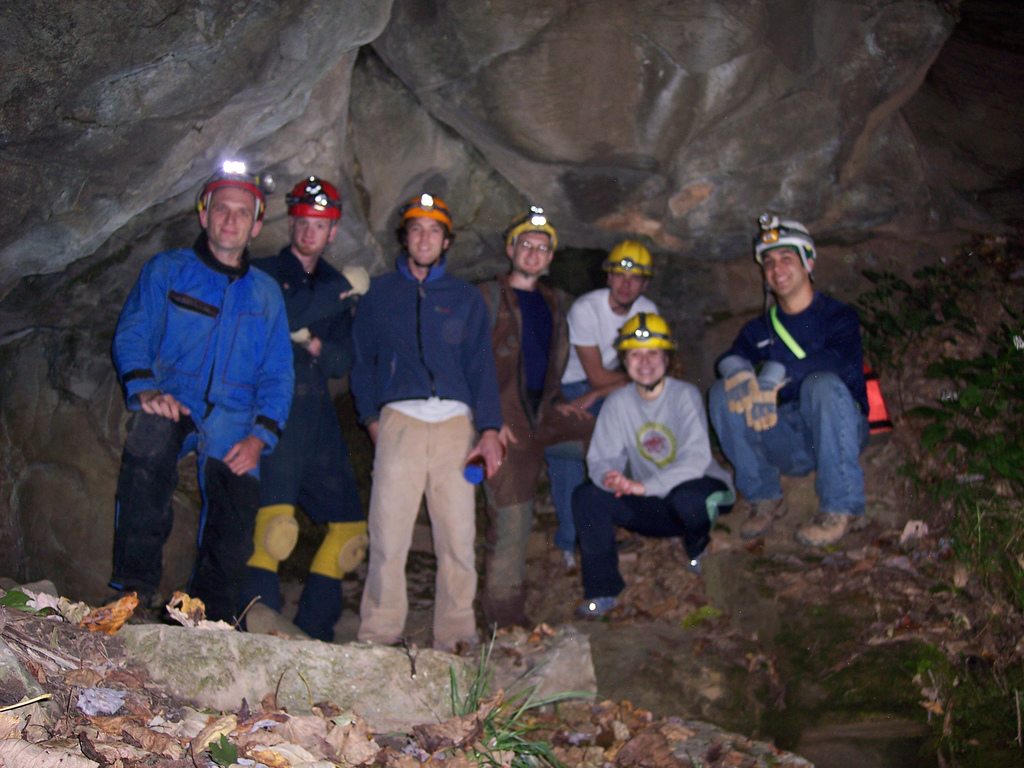
Brian, Kyle, Aaron, Dave, Tom, Rachael and John at the entrance to Beaverhole Upper.

The cave entrance was completely dry. I'd never noticed this before, but the cave stream actually sinks in the entrance room and resurges about 20' down the hill from the cave entrance; you can't tell that the water is being pirated at normal levels but we saw it sink right into the floor. We took the usual high route to the back of the cave, stopping to check out different nooks along the way. I poked around in some of the passage that usually moves water towards the back since it was so dry; we found a 4" crayfish stranded in a 6" puddle waiting for a good rain to wash him out.


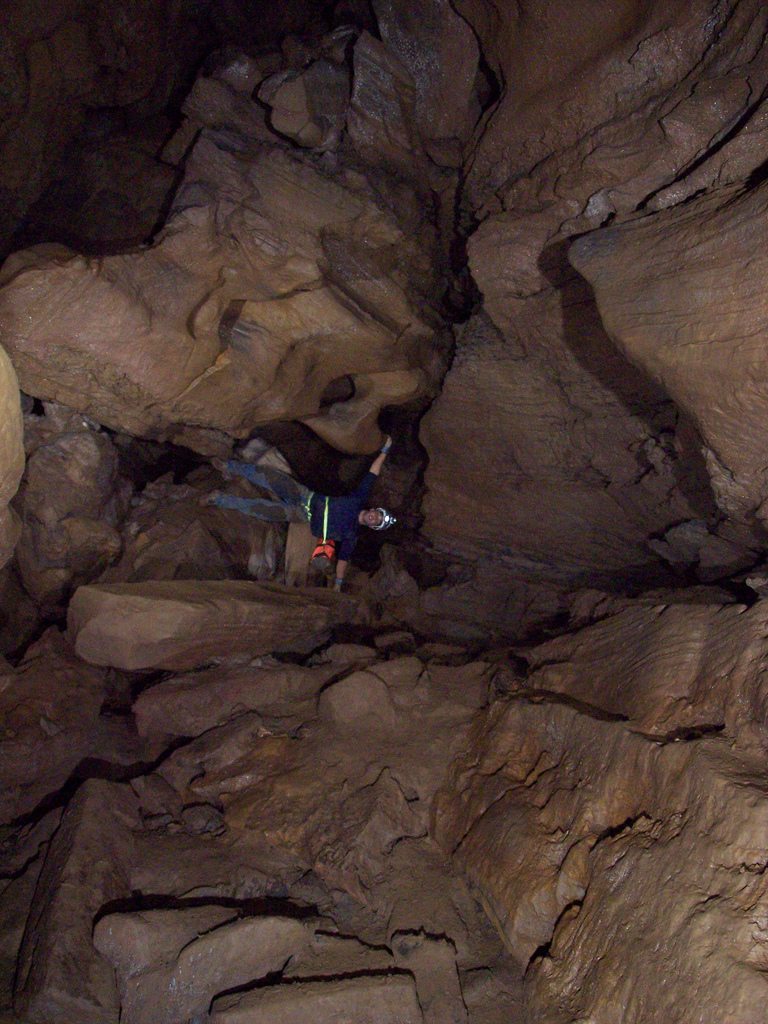
John Cunningham defies gravity.

On the way out, a few of us followed the stream passage the whole way, then everyone met back up again. As I was exiting the front passages, I looked down behind a large rock and saw Rich Finley lying there in street clothes, grinning and waiting to jump out at someone! He, Cara Doud and Dave Olsen had popped in the cave just to say 'hi'. We all headed out, changed clothes and got back to Morgantown at 10:50, only to find that the new IHOP closes at 11pm. Damn. We were in cave for 2.5 hours.

Photos by Brian Masney

Sunday, September 24, 2006

[trip] Clover Hollow at Fall VAR

This past weekend was the 2006 Fall VAR, hosted by the VPI Cave Club in Glen Lyn VA. Judi led a trip into Pig Hole on Friday, but I didn't arrive until late Friday night. We didn't actually go to VAR itself until Saturday evening, and it rained the entire time we were there.

On Saturday morning, we took a trip into Clover Hollow, one of the classic Virginia caves. Ray Sira and Judi Wasilewski led the trip; also along were Alice and Brian from VPI, Rich and Eric from the Front Royal Grotto, Josh from BATS, and Terry from Raleigh NC.

The cave entrance is an oblong-shaped pit about 60' deep, and at the end of a small blind stream bed. Even though it rained intermittently, the main entrance didn't take any water while we were there. After rigging to a large tree at the lip of the pit, we rappelled into the entrance room, then headed down a hallway shaped drain corridor.


The Clover Hollow entrance pit as seen from below.

We did a short crawl and then came to a 3' wide straddle pit with about 15' exposure at the far end. It took a bit of people shuffling, but everyone made it across fine. There's a nuisance hand climb, then a short 20' nuisance rappel followed by another short rappel. We finally came to a big drop - around 90' - into some big passage with an audible waterflow below. Except for the drainage at the entrance of the cave and the bit of water falling near this big rappel, the cave was completely dry. We ditched our vertical gear and headed through some mazey anastomotic passages and a few climbdowns.

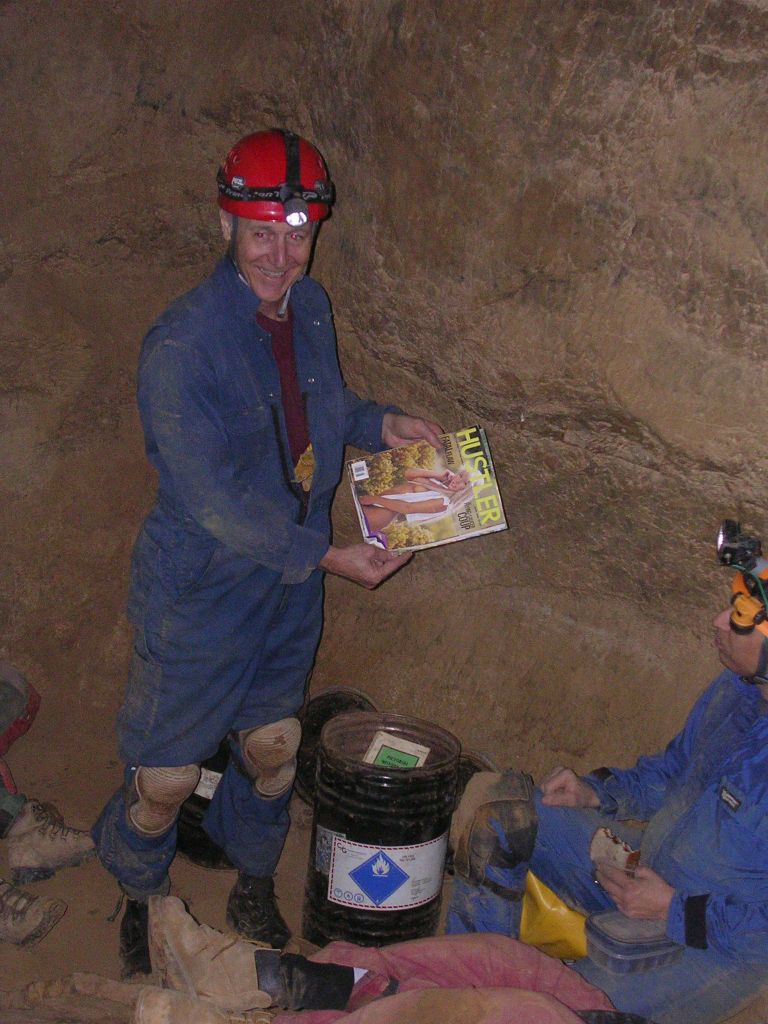
We eventually made it back to a dead-end room in some steeply-dipping passage called the library. This is where VPI stores all their top-secret training documents. I believe it also doubles in function as a time capsule for future civilizations to discover.


"I swear, I only go caving for the articles!"

After grabbing some lunch, we headed back out - taking a different route back. This way led us through the "mud river", a bone-dry crawl which is only about 12 inches tall and seems about 100' long while you're traveling it. We took a small detour to check out a passage loaded with formations and an amazingly-tall rimstone dam. Everyone ascended back up the big pit, up the nuisance climbs, and headed back out. We were in cave for about 5 hours.


Judi and I pose in the entrance room.

See my Clover Hollow photos.

Via Ferrata

After the WVUSG's beginners weekend, we climbed the via ferrata at Nelson Rocks WV. I've never rock climbed before (but I've got plenty of rappelling experience), and I was able to do the course easily. The entire course is bolted with steel rungs and steel cable. You have two lanyards attached to your harness so that when clipping into the next piece of protection, you always have at least one lanyard attached. You get some serious exposure and the views from up on the rock cliffs are absolutely breathtaking. In my opinion, it is easily worth the $35 fee to do the via at least once. Sadly, there was a fatality there the weekend after our visit - I believe the first major accident there ever.


Rich and Dave ascend the first wall of the via ferrata. We are carrying rappelling gear that we never actually got to use. (Photo: Jason Thomas)

See also my via ferrata photos.

[trip] Tucker County Survey

Brian Masney, Mary Schmidt and I went into our current Tucker County cave this weekend (2006-09-16) with the original intention of resuming the survey from where we left off last time - about 2.5 - 3 hours back into the cave. We were in cave around 10:30am, and the water level was the lowest I have ever seen it in the cave (which is also what I said last time).

We made it to the end of the main survey in 3 hours, 45 minutes, including two side-excursions to push tributary leads. Frustrated with the time and effort required to get back here, we decided to abort the survey trip and push forward to either find better passage or another entrance. The upper, main passage continues forward for a ways, and goes from walking passage to stooping passage to crawling on breakdown flakes. It primarily zig-zags following regular joint sets. At some point we dropped down the the middle level, but were kept up off the stream level the entire time. Travel became slow and painful through the breakdown flakes. We passed several right-hand side passages, though none looked very promising. Airflow was very weak and we were not having fun.

We eventually came to another right-hand side lead, this one very curiously keyhole shaped, while the "main passage" continued as a nasty breakdown crawl. Both appeared to be virgin passage - we chose the keyhole. This passage went for 30' or so, then got wider and more rectangular with one or two small, meandering, phreatic tubes in its side. We found a window in the floor, for the first time in several hundred feet revealing water to us again. Excitedly, I rushed on to find a way down, scurried down a nice chute, and shouted back up "we've got cave!" This interesting passage has almost vertical walls, about 3' wide, and almost completely parallel, making it look like an aqueduct (at least, it would have had the cave not been so dry - it was more of a mudduct). The passage had faint airflow. Mary took the lead and scooped about 150' - 200' of walking passage which kept getting larger and eventually taking on a meandering shape. Deciding that we needed something to coax us back into this cave again, we turned around in nice walking passage. We had travelled at least 500 (unpleasant) feet from the current survey.

We were out of the cave at 7:45pm, stopped by Kevin's house to check in, and then had pizza at CJ's.

Wednesday, September 06, 2006

[trip] Simmons-Mingo at OTR

On Saturday of the 2006 OTR, Judi Wasilewski, Llew Williams, Brian Masney, Bob Griffith, Mary Davis, Garth Dixon, and myself (Dave Riggs) took a trip into the historic entrance of Simmons-Mingo Cave. Most of us had been to this entrance of the cave less than two months ago but had been stopped by a wet stream crawl. Our intention this time was to bypass the stream crawl by rappelling a ledge that bypasses it.

We met at 11am at the Monongahela Grotto's tent. We very carefully 4-wheeled out of the muddy OTR campsite and caravanned to Mingo Flats. Llew bribed the landowner's mean-looking dog with a granola bar, and he instantly became Llew's best friend. As we were almost completely geared-up, the Cleveland Grotto showed up behind us; they planned on taking a horizontal trip into the PSC passage. Even though there had been very significant rain the last several days, the stream at the parking area was low and sunk into its sediment bed, and the spring at the cave entrance was dry.

Llew and dog

The way to a mean dog's heart is apparently through his stomach. Llew with his new best friend.

Our team descended the entrance climb, aided by the existing handline. We headed down, down, down the mountains of breakdown, taking a quick detour to peer into a really deep pit on the right. Continuing down, down, down the breakdown, we spotted the Cleveland team on the breakdown mountain above us coming down like a line of christmas lights, which was a cool sight. They followed us to the start of the PSC passage, and Llew gave them directions from there. We eventually made it down to The Etrier room.

This is a 12' overhung ledge rigged with an old webbing etrier which leads down to a mid-level room. The mid-level room goes to a small, wet, stream crawl on the left, and a 30' ledge to a lower room on the right. We decided to rig a rope above the etrier, down the drop, around the corner, and down the ledge. This turned out to be a bad idea due to the large number of rub points involved. Next time, we'll either get wet in the stream crawl, or we'll rig the pit to the right just before the etrier drop (which looks like it connects to the later stream passage).

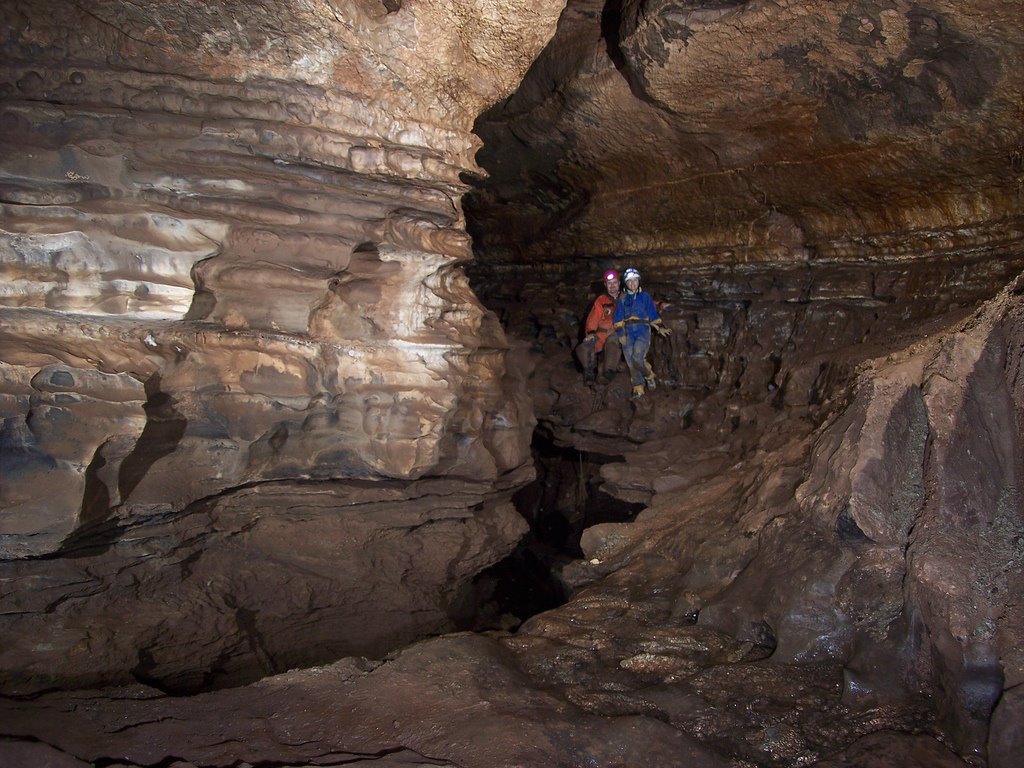
Anyway, everyone descended the two drops, ditched our vert gear, and headed down a passage towards the stream. It's here that Simmons-Mingo Cave really starts. The stream passage moves a lot of water and has carved a giant canyon passage. The floor is filled with potholes that make it look like swiss cheese. We climbed down into the canyon passage and headed upstream since it looked like we'd stay dryer than going downstream. Though the water didn't seem very high, we all got wet before long. After touring the upstream branch and poking leads, we decided to head back.

Bob and Mary in canyon

Bob and Mary in the big canyon passage. The cave stream is about 10' below them.

One-by-one we ascended up the first ledge. Progress was slow as several people were working out kinks in their frog systems. I was the last one up, pulled and stuffed the rope, then realized that my pack was sitting back down at the bottom. Damn. Rather than make everyone wait on me to rappel and ascend back up, I opted to try out the stream crawl instead. As I'd heard, it was definitely a wet crawl, with my chest in the water and butt against the ceiling. It's obvious by the size of the cobbles in this stream that it moves a good bit of water. We'll need to bring spare dry clothes if we take this route next time.

After derigging the rope, the climb back up and out all that breakdown began. This was pretty tiring work while wet, muddy, and carrying rope and vert gear. Brian took some good photos in one of the big rooms on the way out, then he sacrificed one of his flash units to the cave gods. We were back outside after about 6 hours, and the Cleveland Grotto had already left. We packed up and stopped for dinner on the way back to the campsite.

Group photo

Group at the historic entrance to Simmons-Mingo Cave. (L-R) Brian Masney, Dave Riggs, Judi Wasilewski, Bob Griffith, Mary Davis, Llew Williams, Garth Dixon

All photos by Brian Masney

OTR 2006


The 2006 Old Timers Reunion has come and gone; the rain seemed to scare away some of the kooks making it pretty enjoyable. Unfortunately, the rain also made it cold, wet, and incredibly muddy... but you'll have that. Judi and I did some truck camping to avoid sleeping in a nasty tent, but we still wound up leaving at around midnight on Saturday to head back to warmer and dryer quarters.

Highlights:

- Instructions at the gate on the way in: "Do something weird."
- Caving trip into the historic entrance of Simmons-Mingo Cave
- Bill Biggers told me that I look just like Lew Bicking
- I picked up the Northern Pocahontas WVaSS Bulletin, the Karst Hydrology Atlas of WV, and the '89 SERA Guidebook
- Being videotaped for the blockbuster new film, How I Learned to Stop Worrying and Love Druid Cave
- Seeing lots of friends and meeting lots of new ones

Monday, August 14, 2006

[trip] New River Cave BSA Trip

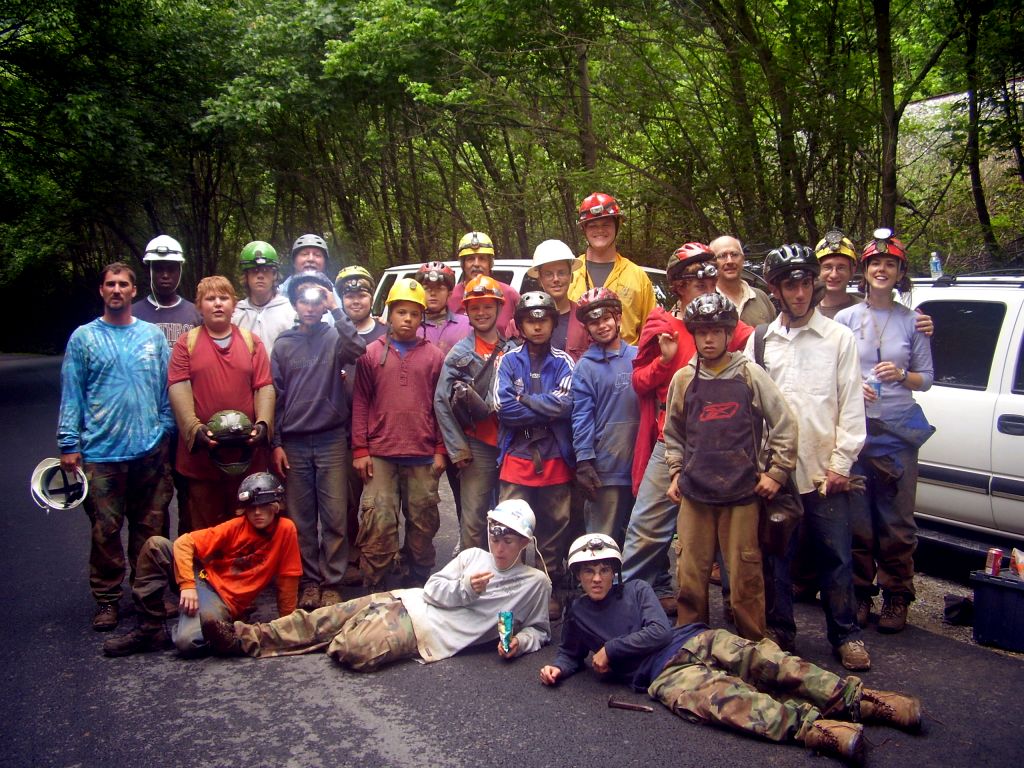
Judi Wasilewski and Pete Sauvigne of the VPI Cave Club and myself, Dave Riggs, led Boy Scout troop 140 of South Carolina into New River Cave this weekend. Our group consisted of 18 scouts, four adults and the three guides.


Troop 140 along the road below New River Cave

New River Cave is the longest cave in Giles County, VA, at over 5 miles in length. Access to the cave is forbidden without written permission from the owner, Tim Kilby. Parking is along the New River, and the sole cave entrance is up an extremely steep hillside. We slowly climbed up to the entrance, did a final equipment check, and all met in the entrance room just inside the cave. The land-owner had prepared a nice written statement to introduce everyone to the cave and to caving.

We broke the large group up into three smaller groups of 6 scouts each. My group, age group 15 - 18, spent about 3 hours in the cave. We headed back in to the register room, through lots of decorated passage, and back to a big fault chamber with a steep dirt slide down the fissure. They had a great time, asked lots of questions, and did an excellent job of traversing the cave terrain. Upon exiting the cave and realizing that we were the first ones out, they were eager to head back in and explore the cave aimlessly (and to try their best at surprising the other groups)!

The last group made it out after about 4 hours in cave, and everyone headed back down the mountainside to eat sandwiches. The scouts and the trip leaders both had a good time on this trip, and I'd enjoy leading another BSA troop in-cave again.

Monday, August 07, 2006

[trip] GVKS Survey 2

Another survey trip for the GVKS again last week, this one 16 hours with zero feet surveyed!

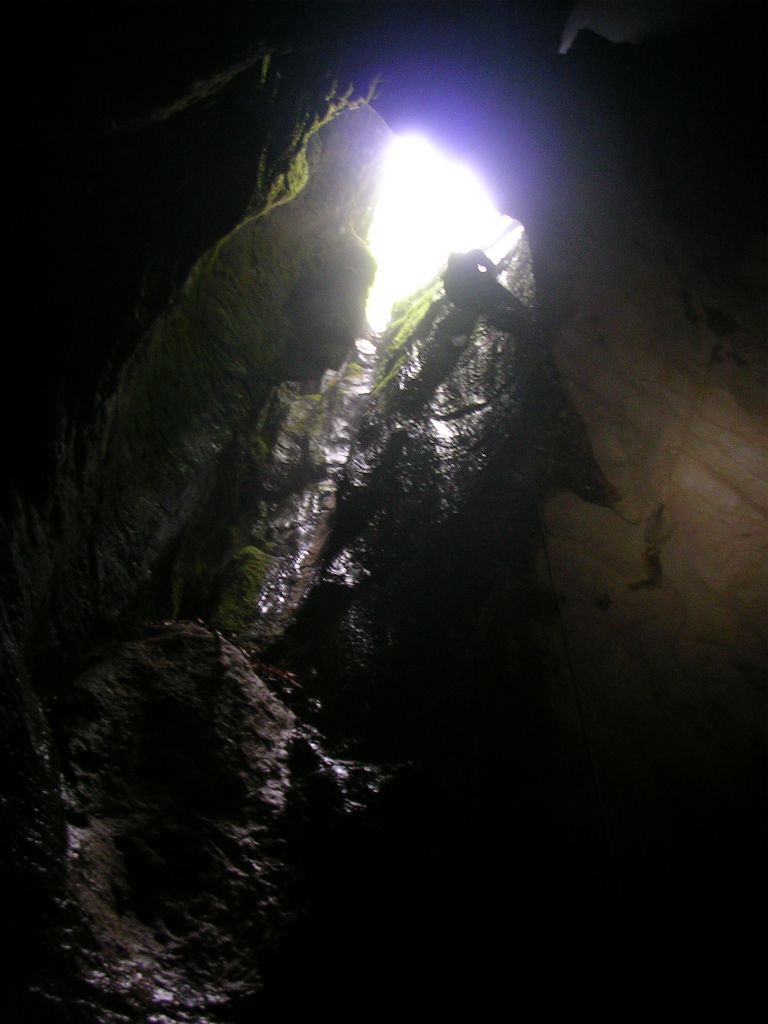
Terry McClanathan and I ascended the Southwest Dome, currently the tallest known pit in WV, to get an accurate measurement of its height. There's a rebelay about 185' off the floor; it's at a small loft so you can get off rope onto your feet when you cross the rebelay. The loft is large enough for a couple people to stand and keep clear of rockfall from above. You pendulum about 10' to the left and continue upwards, the top of the dome slowly getting narrower and narrower to the point that there's a nice "helmet check" shelf to avoid near the top.

The very top of the dome is really just a mud-floored shelf; another pit is visible to the left, and there's no obvious passage from there, though I never unclipped from the safety line to check. There were several small solutional passages intersecting the pit on opposite wall on the way up, but no water was noted from below the rebelay to the top of the dome.

The rebelay pendulum was a bit tricky on the way down, but from there you've got a straight rappel down the rest of the pit - at least, you would if the rope weren't so muddy. I had to feed my microrack most of the way down because it was so gritty! The last 75' of rope seemed clean, presumably from the small amount of spray present (we did not get wet on rope). The pit measured 247' from bolt to floor, 240' from the upper ledge.

It was amazing to follow the bolt route up this huge dome, what an incredible effort it must have been!


Frogging up the tallest known dome in WV... 20' off the floor, only 220' left to go!

This cave is NOT open to the general caving public. It is only open for survey by the Germany Valley Karst Survey under contract to Greer Industries. OTHER CAVING IS STRICTLY FORBIDDEN.

Photos by Brian Masney

Wednesday, August 02, 2006

Misc.

Judi and I drove down to Mingo Flats/Elk River Valley and met Llew Williams, Bob & Mary, and a few others for a trip into the historic entrance of Simmons-Mingo Cave. Llew had his camp set up in the mouth of the cave to keep cool. We climbed down and down a few breakdown hills, then descended a cable ladder to a nice pit and a wet crawl. Nobody had on vert gear, and the majority voted against getting wet, so we never made it to the Good Stuff.

One of my New Years Day Cave trip reports was published in this month's West Virginia Caver, does this make me a BNC?

Hellhole is now the 16th longest cave in the US at 23.90 miles. (Edit: 2006 season closed with 24.92 miles, passing Sloans Valley for 15th place!)

I got my TRA membership in the mail today... not bad considering I mailed it in the day before the deadline. See you at OTR!


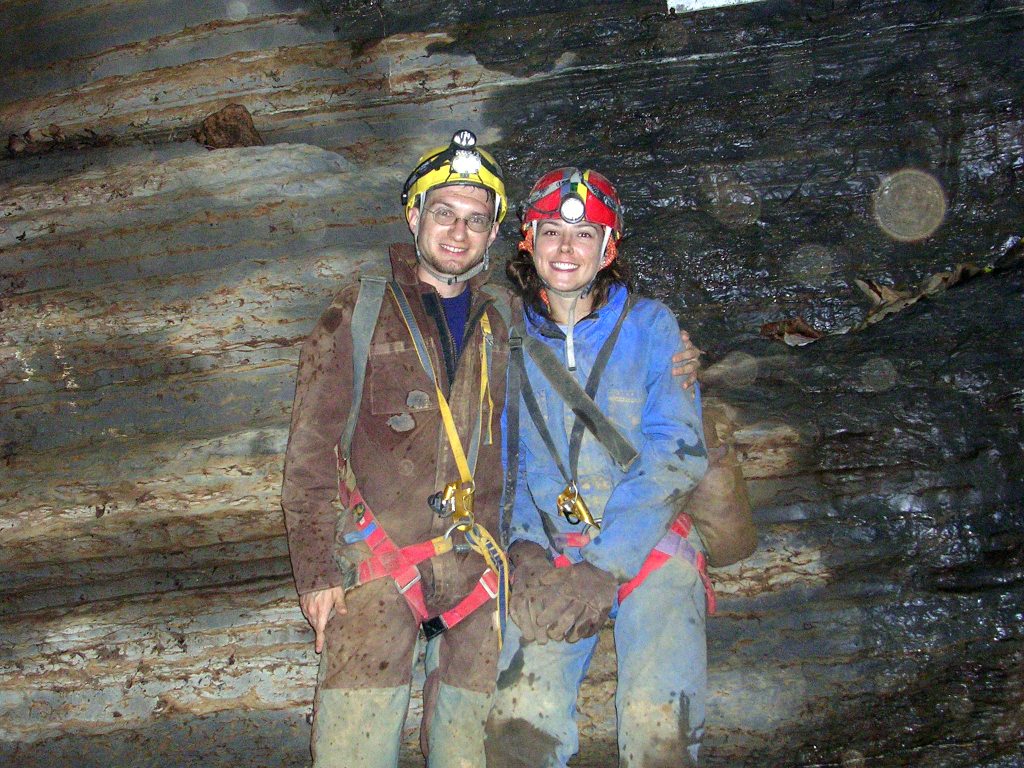
Judi Wasilewski and Dave Riggs in Simmons-Mingo Cave. Photo by Llew Williams.